
Forres has been here a long time, and it shows. Here’s the story of the town, from an Iron Age hillfort and Pictish carvings to royal charters and the high street we walk today.
Further reading: The secret valley: a history of Dunphail
Forres is one of the oldest towns in Scotland, and many traces of its past can still be seen today, from an Iron Age hillfort to a medieval high street that still follows its original layout.
See also: Forres people from the past
The hillfort on Cluny Hill
Nelson’s Tower dominates the wooded Cluny Hill above the town, but the 200-year-old monument sits on a far older site. Community archaeological digs on the hill have revealed a hillfort around the summit, dated to between about 800 BC (the Late Bronze Age) and 350 BC (the Early Iron Age).
Unlike the unenclosed settlements found elsewhere in Moray, this was a fortified hilltop, and the finds add to evidence of iron-working on a large scale around the Moray Firth. You can read more on the Cluny Hill dig blog.
Sueno’s Stone
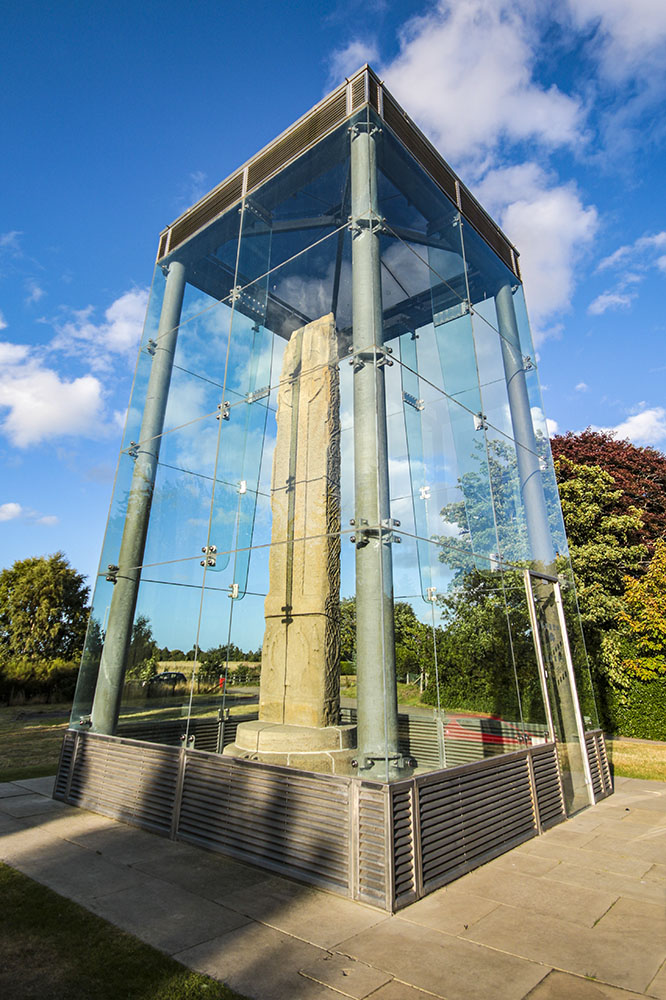
Standing at the eastern edge of the town is Sueno’s Stone, the tallest piece of early medieval carved stone in Scotland. The single sandstone slab is 6.5 metres (21 feet) high, and still stands where it was first raised. It is now enclosed in a glass shelter to protect it from the weather.
It was carved between the mid 800s and the early 900s. One side bears a large ring-headed cross; the other is divided into panels showing a great battle, with rows of warriors and what appear to be beheaded captives. Who raised it, and which battle it records, is still debated. The name ‘Sueno’ links it to a Danish king, but that connection was only made centuries later and is now thought to be mistaken.
Royal burgh
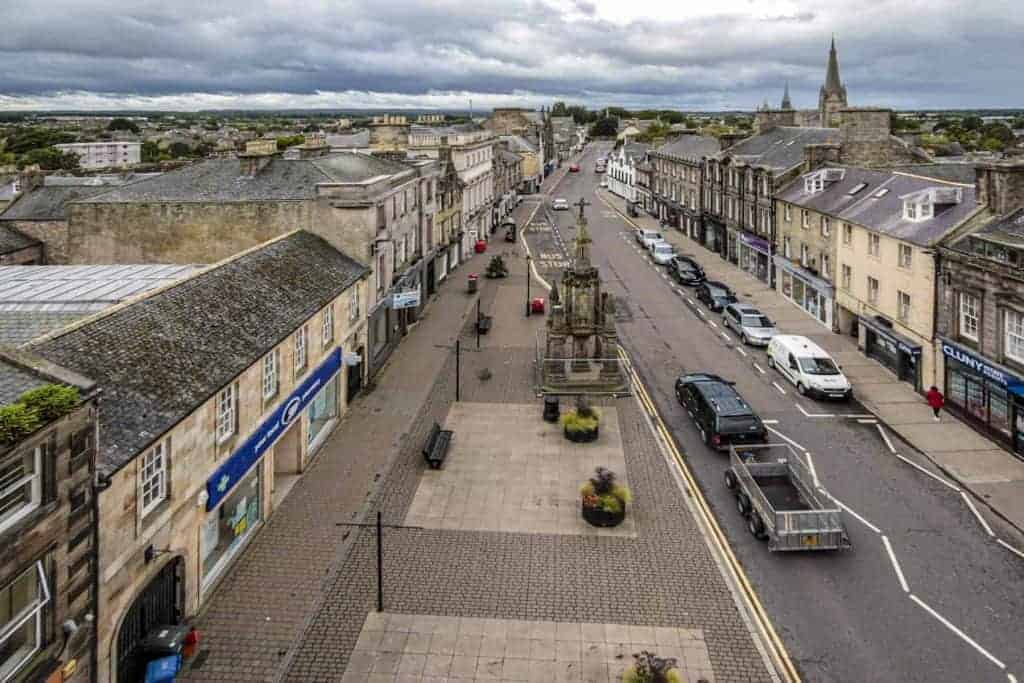
There was a royal castle at Forres from at least 900 AD, on the mound at the west end of the High Street now known as Castlehill. Forres is believed to have become a royal burgh around 1140, in the reign of David I, and later kings, including William the Lion, issued charters from the castle.
The early charters have been lost. A later charter was granted by James IV on 23 June 1496, confirming the rights, privileges and duties of the townspeople.
In 1390 the town was attacked and burned by the ‘Wolf of Badenoch’, Alexander Stewart, Earl of Buchan. Yet Forres still shows much of its medieval layout, with long, narrow plots running at right angles to the High Street. The town grew rapidly in the 19th century, and the castle mound is now a public garden.
Macbeth
The real Macbeth was the ruler of Moray, and became King of Scots after defeating King Duncan in battle at Pitgaveny, near Elgin, on 14 August 1040. Duncan was killed in the fighting, not murdered in his bed as in Shakespeare’s play. Macbeth reigned until his death in 1057.
Shakespeare set King Duncan’s court at Forres, and the witches’ meeting with Macbeth and Banquo takes place on a heath on the road to Forres, which has tied the town to the play ever since.
The Mercat Cross
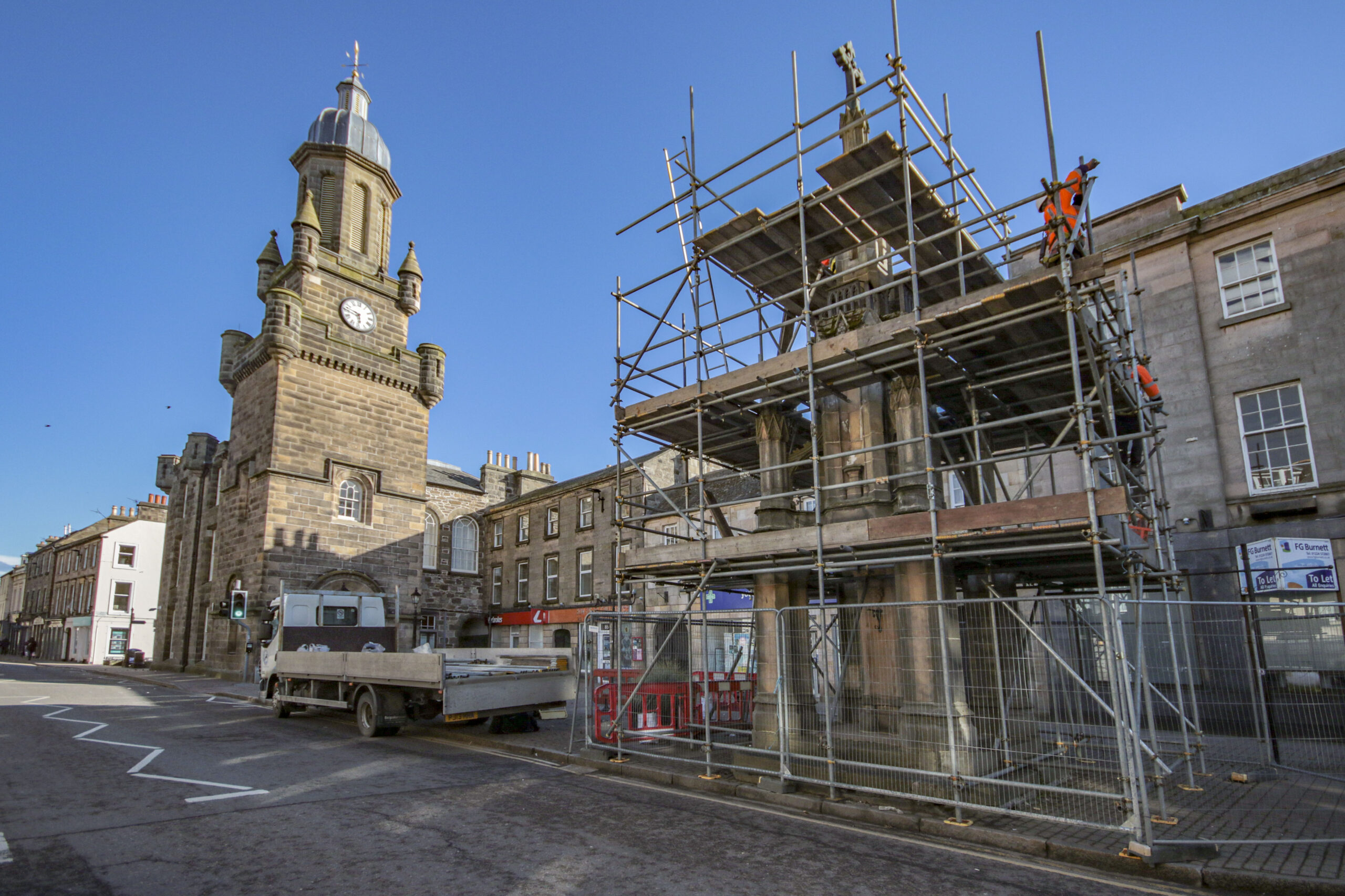
A mercat cross is a common sight in Scottish town centres, but the Forres cross is more elaborate than most. The pinnacled structure has stood in the middle of the High Street since 1844, and was modelled on a much smaller scale on the Scott Monument in Edinburgh. It has since been restored, with its finials and ironwork replaced.
The Tolbooth
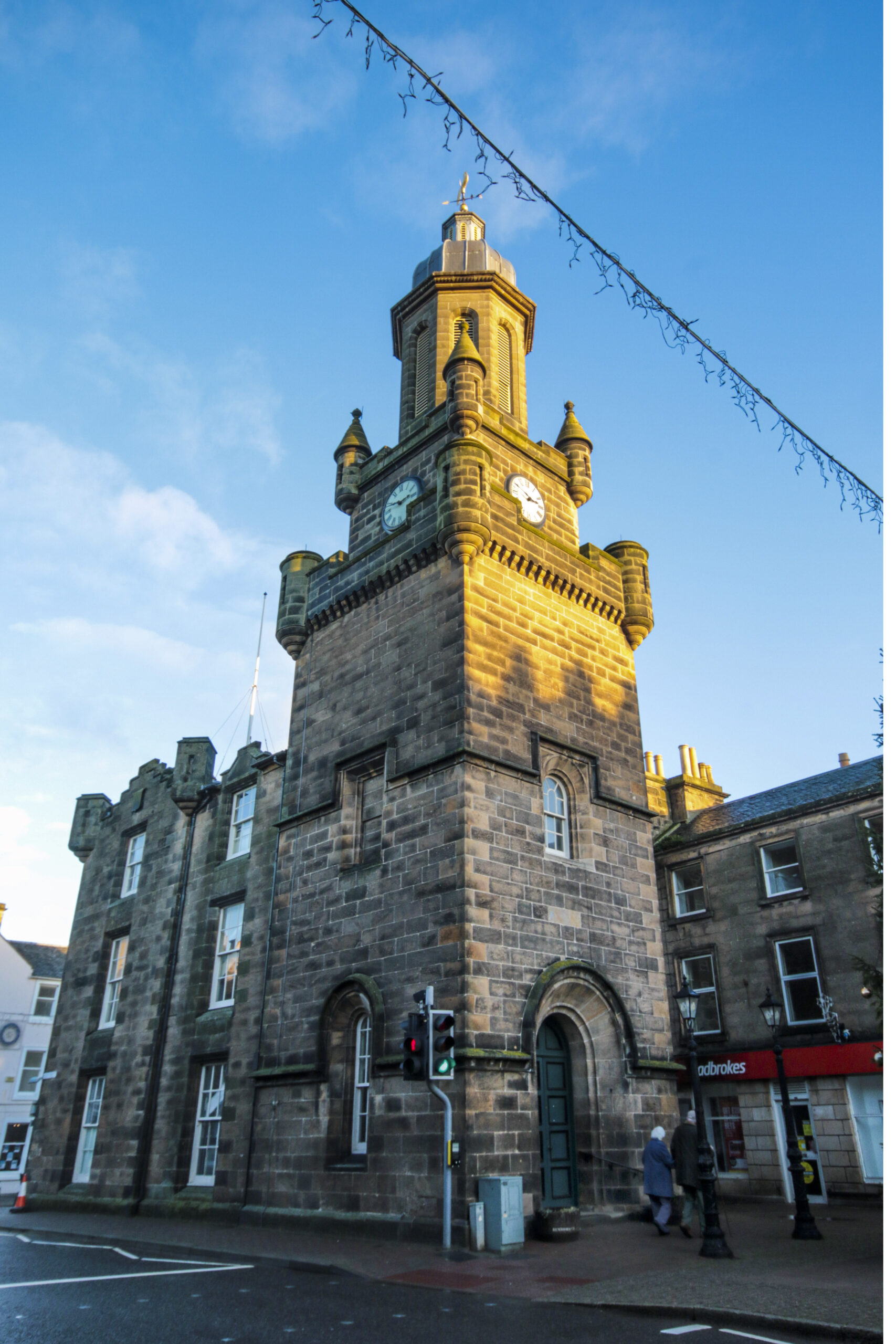
The Tolbooth is the landmark at the heart of the High Street. There has been a building on the site for some 800 years, but the present one dates from 1838.
The first record of the Tolbooth is a proclamation made there in 1586. By 1619 it was being used ‘for sure keiping and deteining’ wrongdoers and prisoners, and in 1655 it was described as a ‘thackit’, ruinous building whose walls could not carry the roof. Between 1671 and 1677 it was repaired and extended to three storeys, and in 1698 the merchants and burgesses raised ‘£333 1s 8d’ for a major rebuild.
Inside is a grand courtroom, which served as council offices for many years and is now used for events and meetings, and behind it a jail with six cells. In the summer season you can book a tour of the courtroom, cells and clock tower, where a winding stair leads out to a parapet with views over the town. The Forres Heritage Trust has more details.
The Falconer Museum
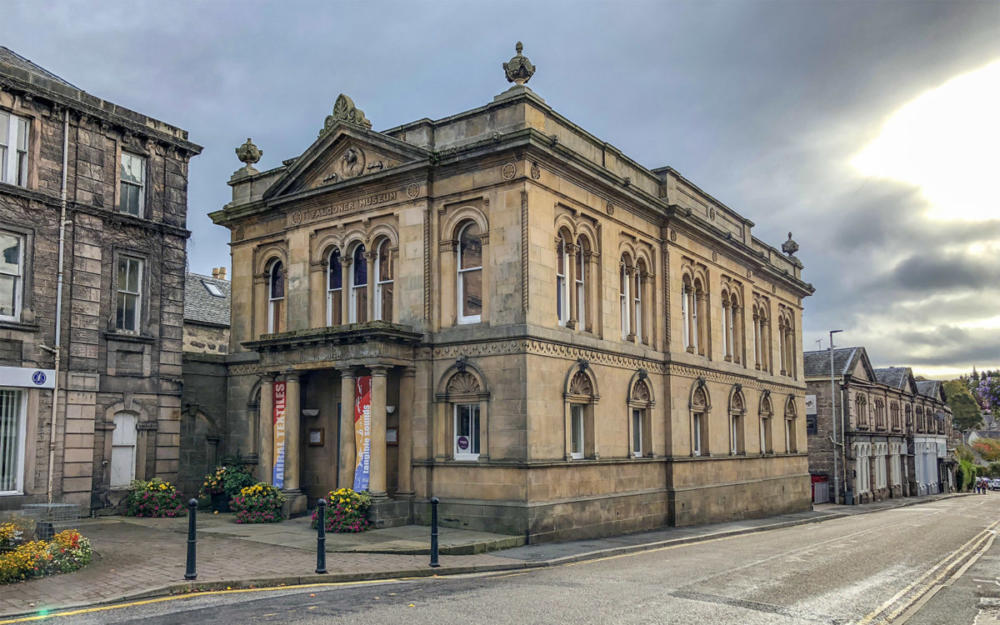
The Falconer Museum on Tolbooth Street was founded through a bequest from two Forres-born brothers, Alexander and Hugh Falconer. Hugh Falconer (1808–1865) was a distinguished geologist, botanist and palaeontologist who spent much of his career studying the geology, plants and animals of India.
The museum closed in 2019 after its council funding was cut, but plans are now under way to reopen it under a new operating model, with local volunteers at its heart. The Friends of the Falconer Museum have the latest news.
Nelson’s Tower
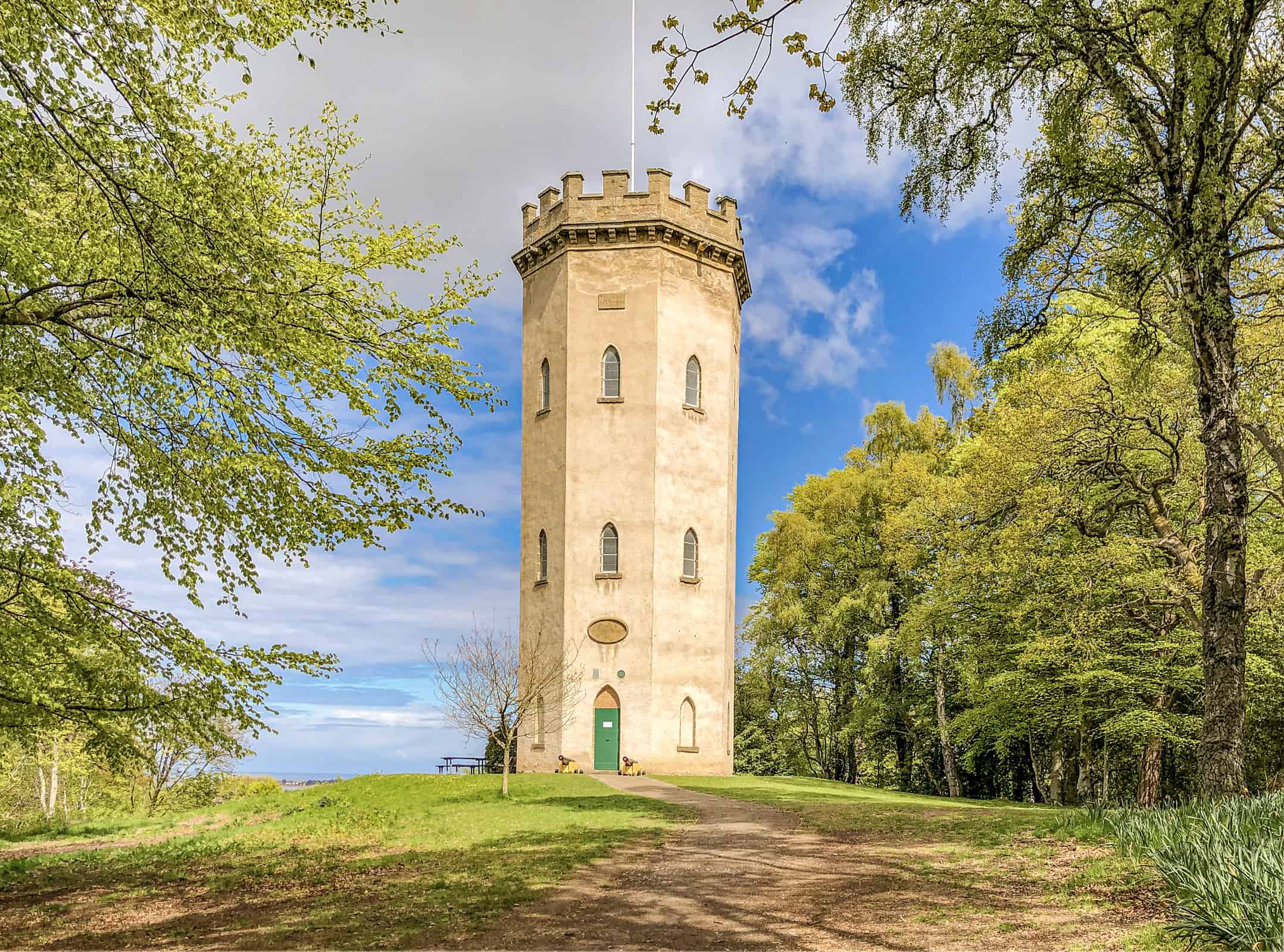
At the top of Cluny Hill, with views across Forres and Findhorn Bay, stands Nelson’s Tower. Its foundation stone was laid in August 1806, less than a year after Nelson’s death at Trafalgar, making it one of the earliest monuments to him in Britain. Paid for by public subscription, it was completed in 1812.
The tower is reached by a short but steep walk through Grant Park and Cluny Woods, so it isn’t suitable for anyone with limited mobility. Inside, 96 steps climb to the viewing platform on the roof. It’s open in the afternoons from around Easter to the end of September, run by volunteers from the Forres Heritage Trust (opening dates are set each year, so check before you go): look out for the red ensign flying from the tower when it’s open. Entry is by donation, and there is free parking at Grant Park.
The James Thomson monument
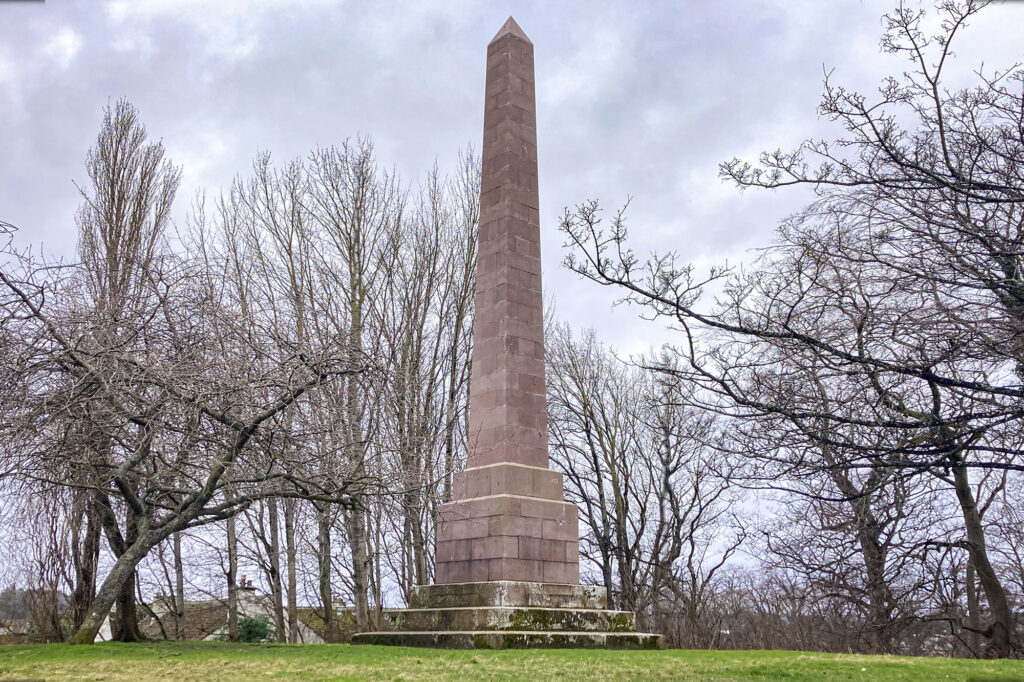
A tall granite obelisk on Castlehill, on the site of the old castle, marks the west end of the High Street. It commemorates James Thomson, an army assistant surgeon from Cromarty who, after the Battle of the Alma in the Crimean War in 1854, stayed behind to care for hundreds of wounded Russian soldiers. He died of cholera at Balaklava weeks later, aged 31.
Thomson wasn’t a Forres man, so why is his monument here? A site in Cromarty was refused, and Sir James McGrigor, head of the Army Medical Department and an admirer of Thomson, offered the castle site instead. The obelisk was raised by public subscription in 1857.